Welcome to our new website! We're still in the process of making updates and improvements, so please stay with us.
- Home

- News & Events
- Towards a More Democratic International Public Fin...


Towards a More Democratic International Public Finance Architecture


Description of the Event
The current international public finance architecture is clearly failing to provide necessary resources for countries to finance their developmental needs. According to the dominant narrative, public finance is inherently insufficient, and thus requires promotion of private finance to advance sustainable development.
Most rich countries that dominate decision-making on aid flows through the OECD and Multilateral Development Banks (MDBs) have supported the increasing use of scarce concessional finance to leverage private finance, including blending. The recent adoption of new rules for the reporting of Official Development Assistance to allow for private sector instruments to count as aid is also an example of this trend.
This dominant approach promoted by both rich countries and MDBs, however, raises many concerns on unequal benefits, unintended impacts, measurement, and regulation. While rich countries and multilateral institutions promote private finance-centric approaches, they evade their own public finance commitments for development and climate needs.
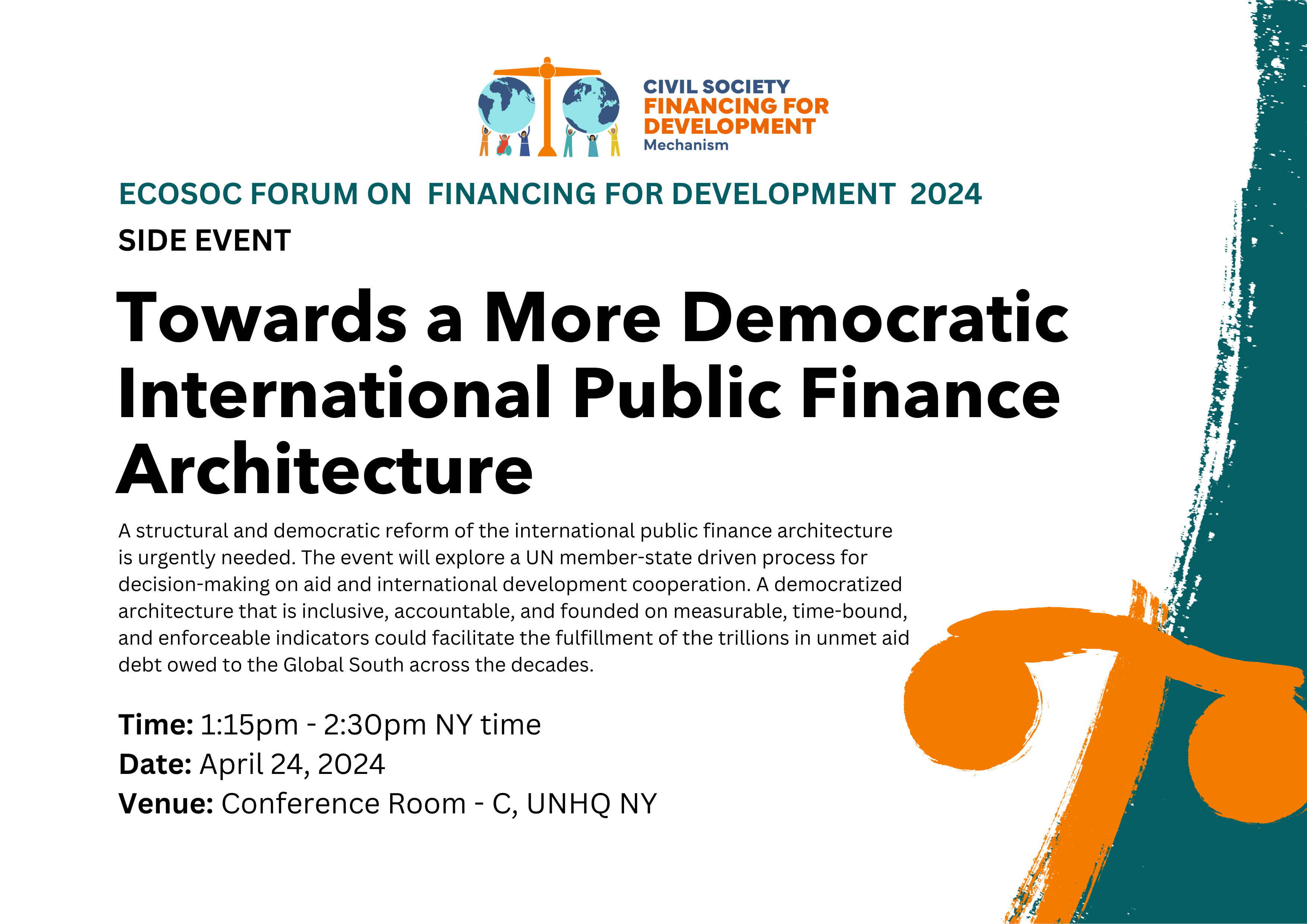
A structural and democratic reform of the international public finance architecture is therefore urgently needed. This could include conversations to establish UN member-state driven processes to lead on decision-making on aid and international development cooperation. A democratised architecture that is inclusive, accountable, and founded on measurable, time-bound, and enforceable indicators could facilitate the fulfilment of the trillions in unmet aid debt owed to the Global South across the decades.